

Oilseed press cakes are generated in large quantities as by-products of vegetable oil production. Although these materials are commonly used in relatively low-value applications such as animal feed or fertilizer, they still contain significant amounts of valuable components, particularly proteins. Within the DigInTraCE project, the Laboratory of Process Analysis and Design at the School of Chemical Engineering, National Technical University of Athens (NTUA), investigated the recovery and valorisation of proteins from oilseed press cakes, aiming to transform these secondary raw materials into valuable bio-based resources for more sustainable industrial applications.
The work focused on three different oilseed press cakes: sunflower, cottonseed and rapeseed press cakes. A range of conventional and intensified extraction technologies was investigated and optimized for protein recovery, including conventional extraction, microwave-assisted extraction, ultrasound-assisted extraction, pressurized liquid extraction, and enzymatic hydrolysis. The objective was to identify efficient recovery routes capable of achieving high protein recovery while also showing potential for future scale-up and industrial implementation.
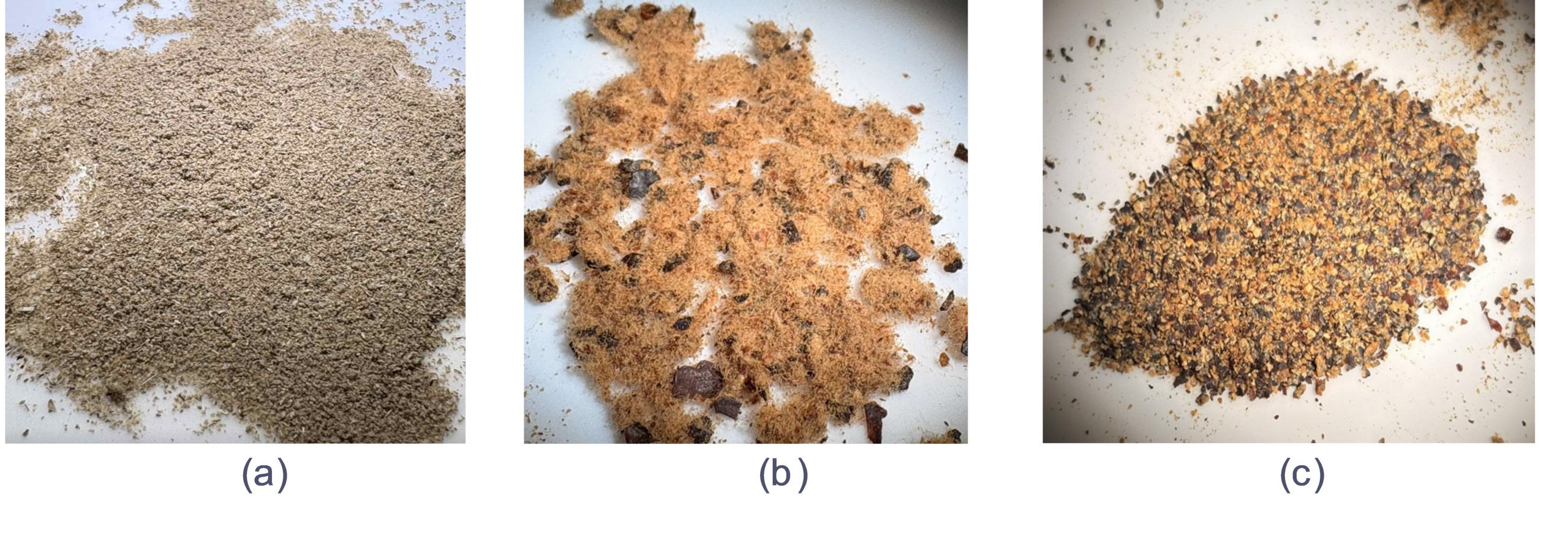
Figure 1. Sunflower (a), cottonseed (b) and rapeseed (c) press cakes investigated as protein-rich secondary raw materials.
The results demonstrated that all three oilseed press cakes can serve as promising sources of recoverable proteins. Under optimized conditions, the project target of achieving protein recovery in the liquid extract above 40% was successfully reached for all investigated raw materials. The results also highlighted the potential of intensified extraction approaches to improve protein recovery and process efficiency, depending on the raw material and operating conditions.
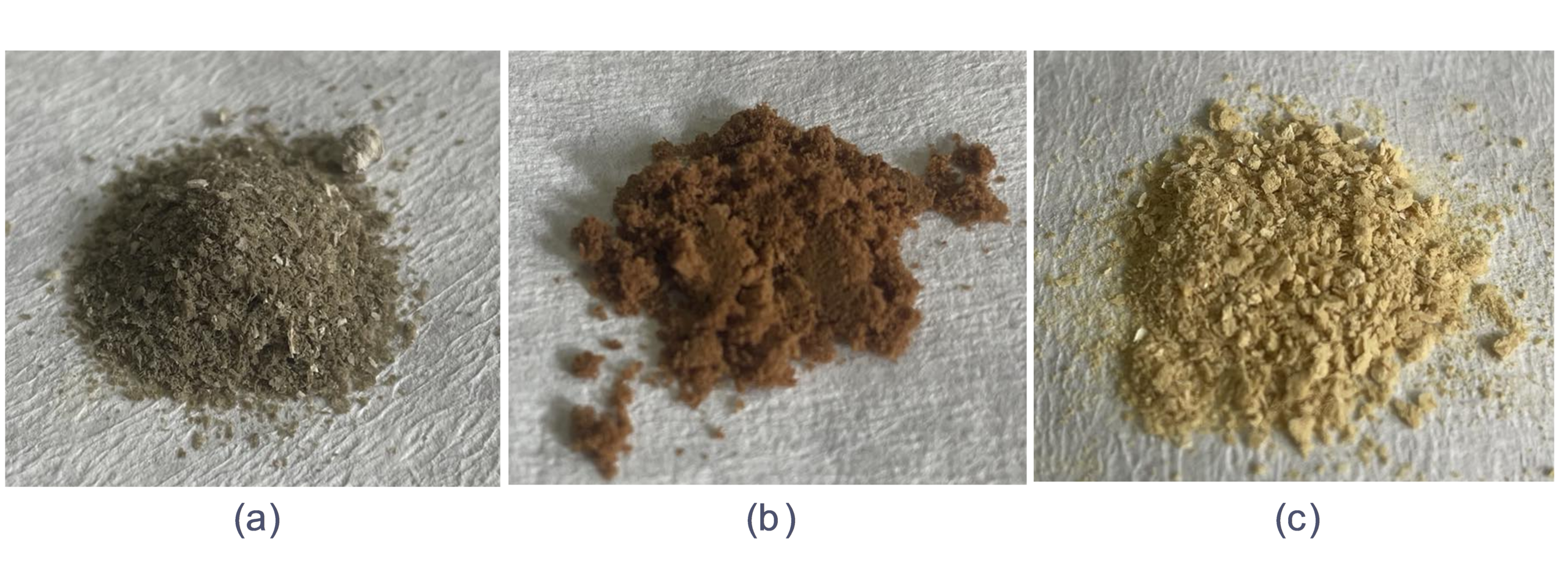
Figure 2. Protein-rich fractions recovered from sunflower (a), cottonseed (b) and rapeseed (c) press cakes.
However, extraction efficiency alone was not the only criterion considered. The recovered proteins were also assessed for their suitability for downstream industrial applications. Protein samples obtained from sunflower, cottonseed, and rapeseed press cakes were supplied to DigInTraCE partner CHIMAR for evaluation in bio-based plywood adhesive formulations through partial phenol substitution. Based on this industrial assessment, sunflower-derived proteins showed the most promising performance in terms of compatibility, processability, and suitability for plywood manufacturing. Sunflower press cake was therefore selected as the most appropriate protein source for further scale-up activities.
Following this selection, three recovery technologies were taken forward for scale-up: conventional extraction, microwave-assisted extraction, and ultrasound-assisted extraction. Conventional extraction was transferred from laboratory-scale flasks to a 10 L stirred-tank system, while the microwave- and ultrasound-assisted processes were transferred to 2 L processing systems. These activities were designed to assess process stability, reproducibility, and protein recovery performance under larger-scale operating conditions.
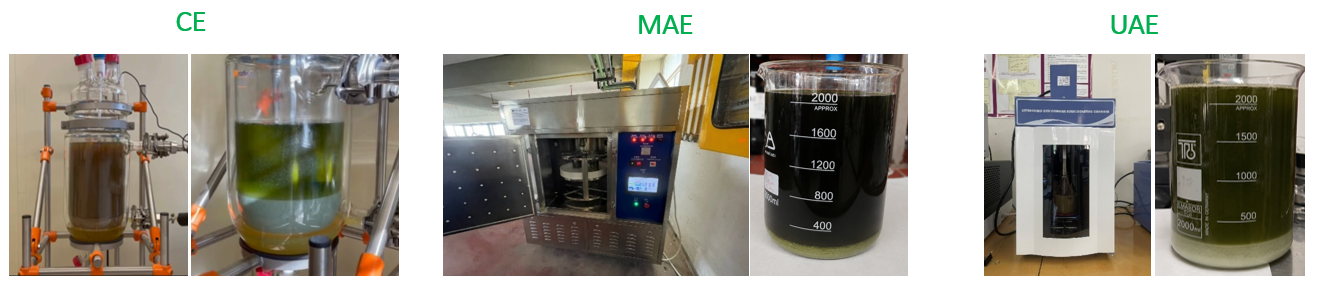
Figure 3. Scale-up of the selected protein recovery technologies for sunflower press cake: conventional extraction (CE), microwave-assisted extraction (MAE), and ultrasound-assisted extraction (UAE).
The scale-up results were particularly encouraging, as the selected technologies maintained satisfactory protein recovery performance under larger-scale processing conditions. Overall, the results demonstrated that the developed extraction processes could be successfully transferred from laboratory to larger-scale operation while largely preserving their extraction efficiency. Importantly, the successful scale-up advanced all three recovery technologies from Technology Readiness Level (TRL) 4 to TRL 5, demonstrating their feasibility under relevant operational conditions. This represents an important step towards the further development and potential industrial implementation of the protein recovery processes.
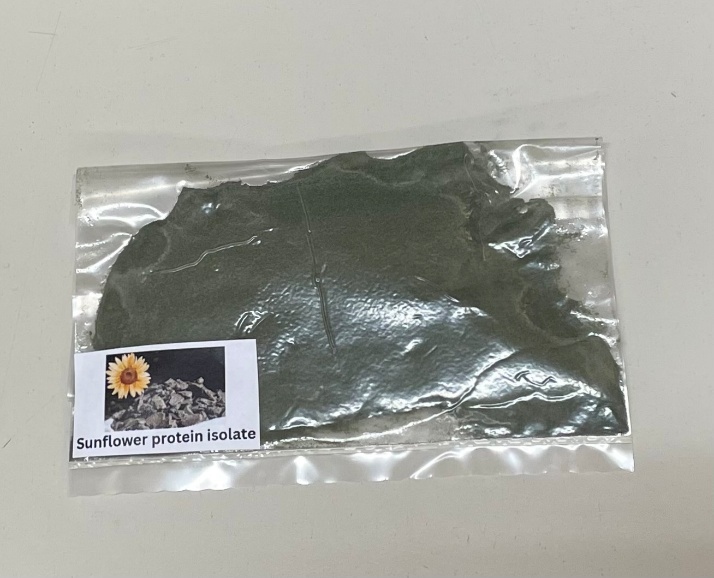
Figure 4. Sunflower protein isolate obtained following extraction and precipitation.
The recovered sunflower proteins are directly linked to the Greek Demonstrator activities of DigInTraCE, where they are being evaluated for use in bio-based adhesive systems for plywood and wood-resin composite production. By connecting secondary raw material recovery, innovative extraction technologies, process scale-up, and industrial application, this work provides a practical example of circular economy implementation. It demonstrates how agro-industrial by-products can be upgraded into valuable bio-based resources, contributing to waste reduction, improved resource efficiency, and reduced reliance on fossil-based raw materials in industrial manufacturing.
Christoforos Vasileiou is a Chemical Engineer and PhD student at the Laboratory of Process Analysis and Design, School of Chemical Engineering, National Technical University of Athens (NTUA). His research focuses on sustainable protein recovery from plant-based materials using innovative extraction technologies, process optimization, and characterization of protein-rich fractions. His broader research interests include bioactive compound recovery, encapsulation technologies, food preservation, and valorizing agro-industrial side streams within the circular bioeconomy.
Dr. Christina Drosou is a Chemical Engineer and postdoctoral researcher at the Laboratory of Process Analysis and Design, School of Chemical Engineering, National Technical University of Athens (NTUA). Her research focuses on innovative extraction and recovery technologies, encapsulation of bioactive compounds, food processing and preservation, functional foods, and sustainable process development. She actively participates in European and national research projects in the fields of food engineering, bio-based processes, and circular economy.
Prof. Magdalini Krokida is Professor at the School of Chemical Engineering, National Technical University of Athens (NTUA), and a member of the Laboratory of Process Analysis and Design. With over 25 years of experience in Food Engineering, her research focuses on food process design and optimization, drying, extraction, and encapsulation technologies, functional foods, and the environmental and economic assessment of products and processes.