

A simple idea with a big ambition
What if the plastic we throw away could become a valuable resource again and what if factories could waste far less material while making the products we use every day? This is the question at the heart of the Italian Demonstrator of the DigInTraCE project, a European initiative funded by the European Union that helps industries become more circular, cleaner, and more efficient.
The Italian pilot set out to prove something practical: that recycled plastic can be used more, and production waste can be reduced, all thanks to smart technology working quietly behind the scenes.
Where and when it happened
The demonstration took place in Italy, across the facilities of Fratelli Guzzini, one of the industrial partners involved, with the most recent successful run completed in December 2025. It brought together companies, universities and technology experts from across Europe, each contributing a different piece of the puzzle.
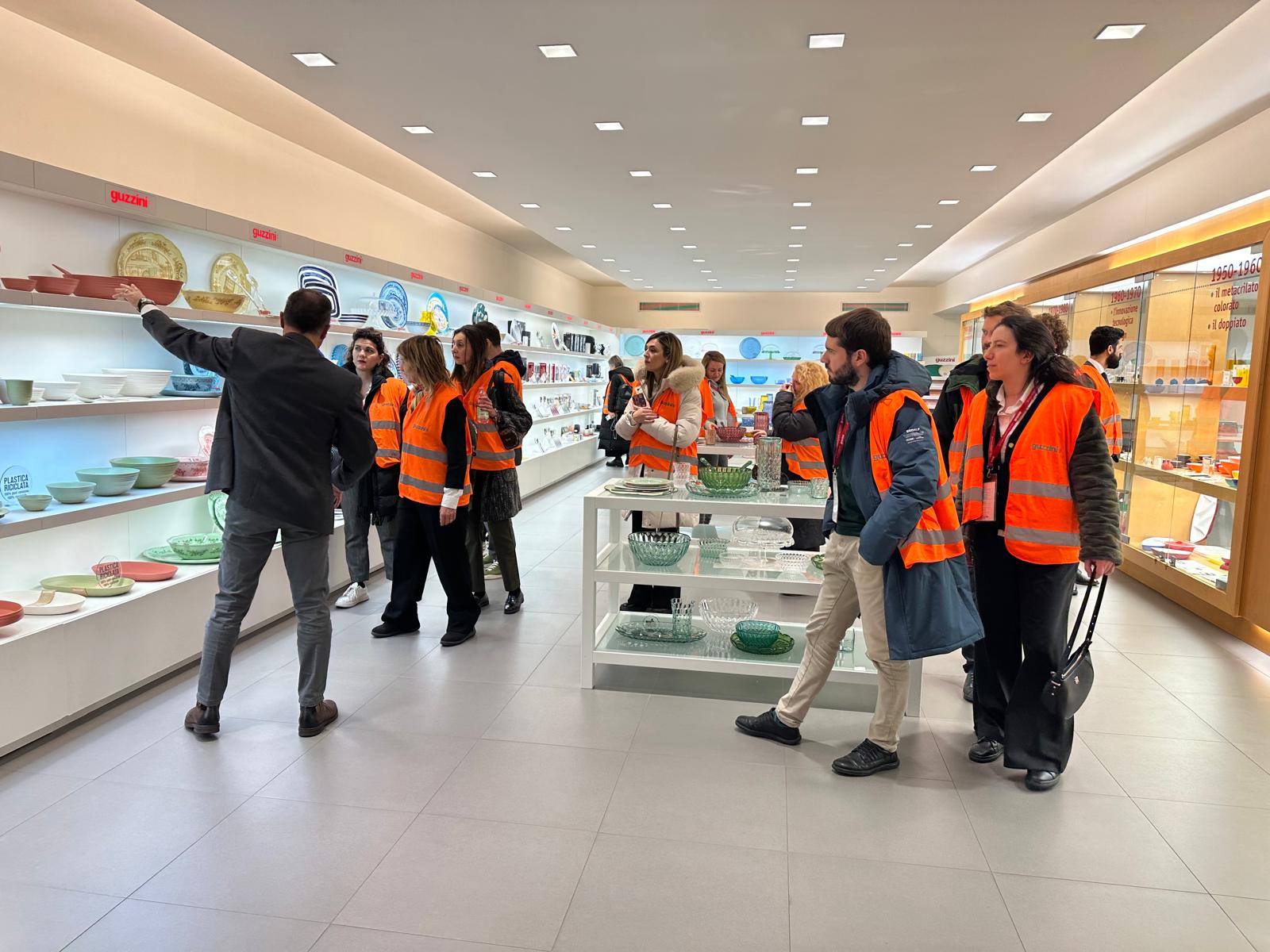
Figure 1 Project partners visiting the Fratelli Guzzini facilities during the Italian Demonstrator activities
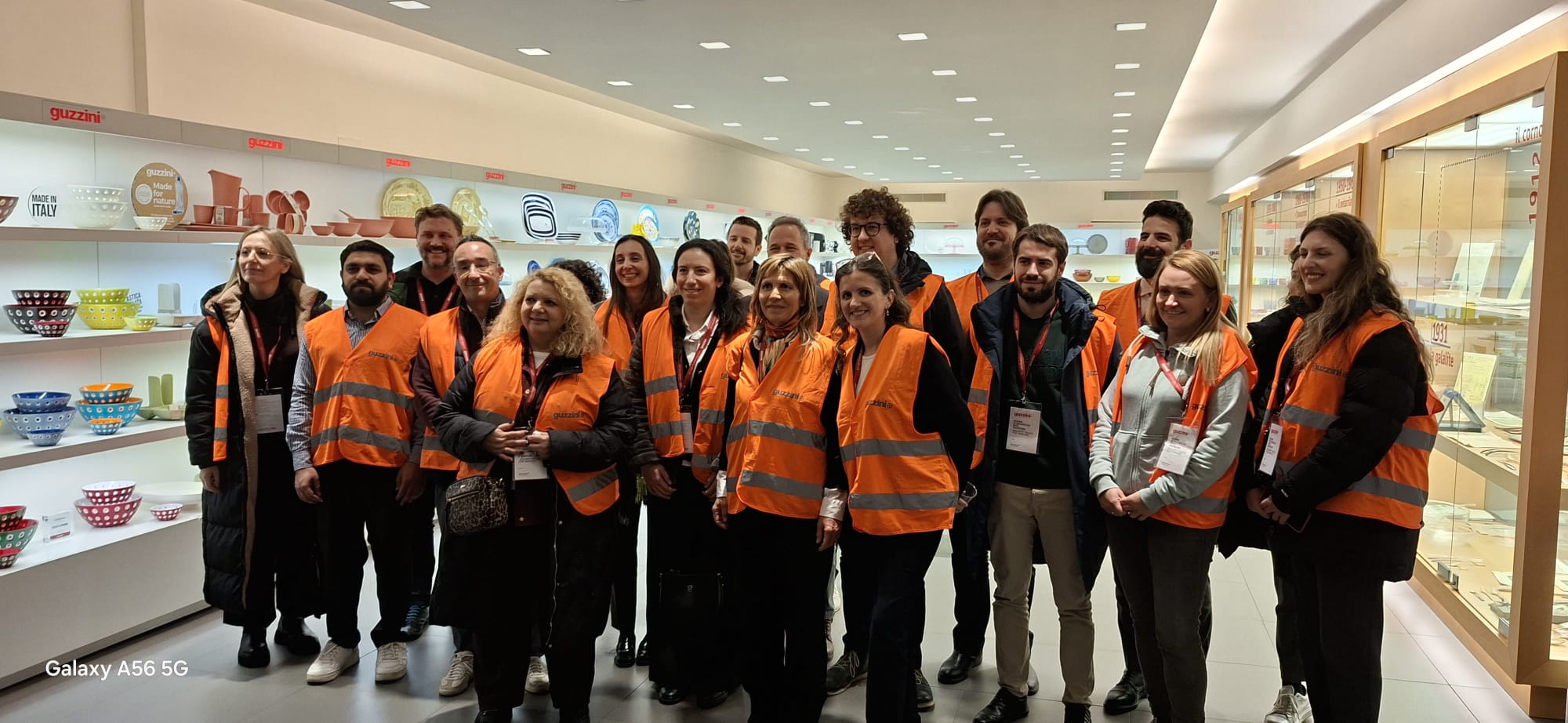
Figure 2 Project partners visiting the Fratelli Guzzini facilities
The team behind it
The Italian Demonstrator was coordinated by DGS, acting as overall project coordinator and technology integrator. DGS developed the Closed Loop Supply Chain (CLSC) Tool, a digital solution designed to support end-to-end production management by enabling real-time monitoring, data-driven planning, process control, and more efficient decision-making across the manufacturing workflow. The other partners each played a clear role:
- Fratelli Guzzini and Thrace Pack acted as the industrial demo owners, providing real production environments where the proposed solutions could be validated under manufacturing conditions. Fratelli Guzzini brought its expertise in high-quality plastic product manufacturing and process optimisation, while Thrace Pack contributed its experience in recycled plastic processing and supplied the material streams used to test circular production scenarios.
- The University of L’Aquila (UVQ) contributed the artificial intelligence layer, designing predictive models able to analyse process data and anticipate manufacturing defects before they occur. Its work strengthened the demonstrator with advanced data science capabilities, turning machine signals into actionable insights for quality control and production efficiency.
- IRIS developed the material characterisation and inspection technologies used to read, analyse and qualify recycled plastic streams. By applying advanced sensing and analytical methods, IRIS enabled a more reliable assessment of material composition and quality, supporting better decisions on how recycled inputs could be reintroduced into production.
- ICCS engineered the colour-sorting system for recycled plastic flakes, combining sensor-based recognition with automated separation technologies. Its contribution was key to improving the consistency of recycled material streams, allowing colour-specific fractions to be selected more accurately before being fed back into the manufacturing process.
Two challenges, one goal
The demonstration followed two connected storylines, both aimed at making manufacturing more sustainable.
- Story one: giving recycled plastic a second life. Thrace Pack produces a coloured bucket that already contains 40% recycled material. The goal was to push that number higher — by at least 15% more. To do this, recycled plastic flakes were analysed and sorted so that only the right material, in the right colour, went back into production.
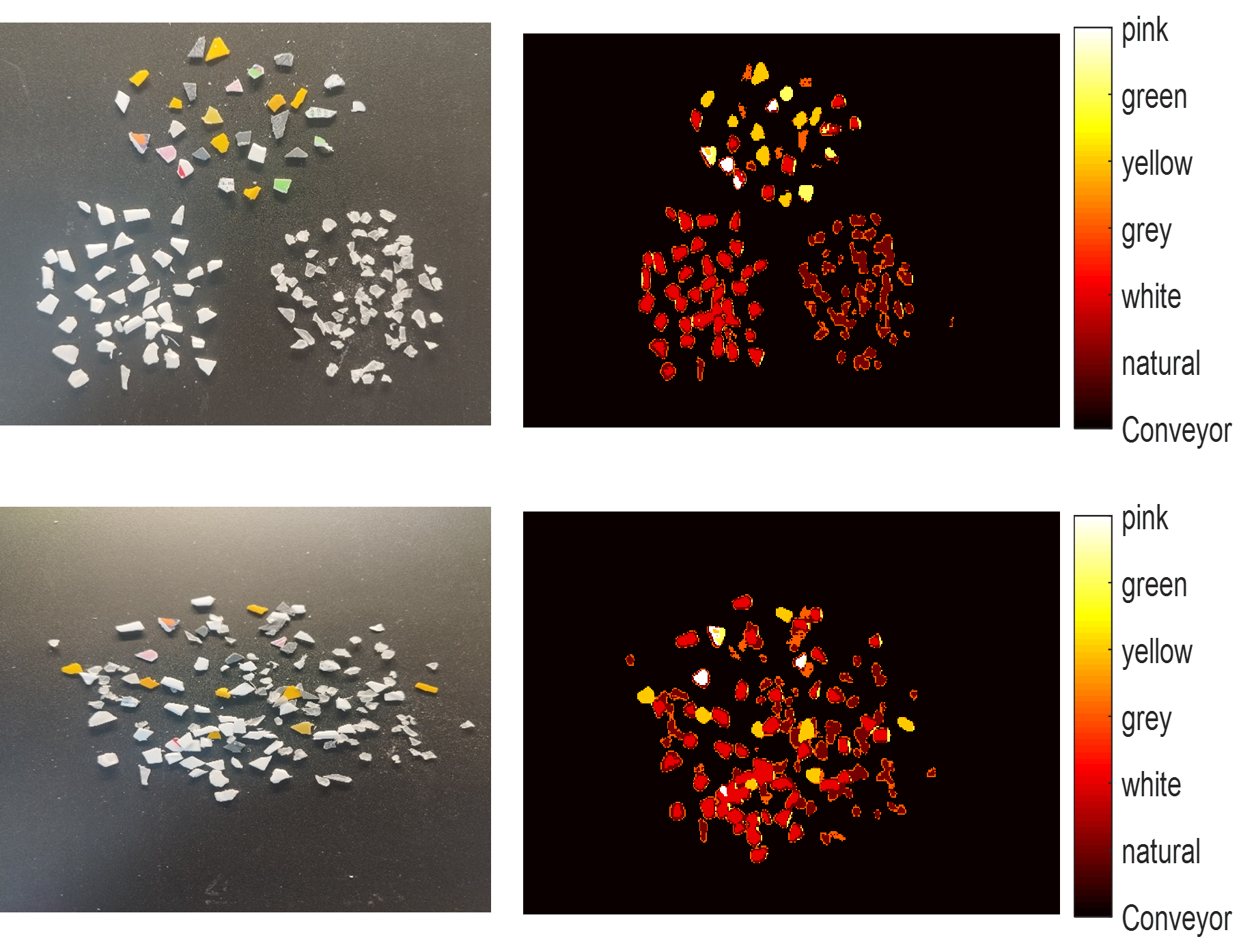
Figure 3 WP6-Italian Demonstrator-Flakes in the conveyor and their classification according to the models developed for the HSI FX-10 Camera
IRIS used advanced “scanning” techniques to understand the quality of the plastic, while ICCS built a machine that automatically separates the flakes by colour using sensors and jets of air. The clean, sorted material was then sent back to Thrace Pack to make a genuine “DigInTraCE bucket.”
- Story two: wasting less while producing more. At Fratelli Guzzini, the focus was on cutting down the scrap produced during manufacturing.
Here, DGS deployed a digital tool that plans and monitors production in real time, connected to the machines through smart sensors.
The University of L’Aquila added artificial intelligence able to predict when a defect was about to happen — for example, when pressure in a moulding machine rose too high. When the system sensed a problem coming, it alerted the operator, who could step in before faulty pieces were even produced.
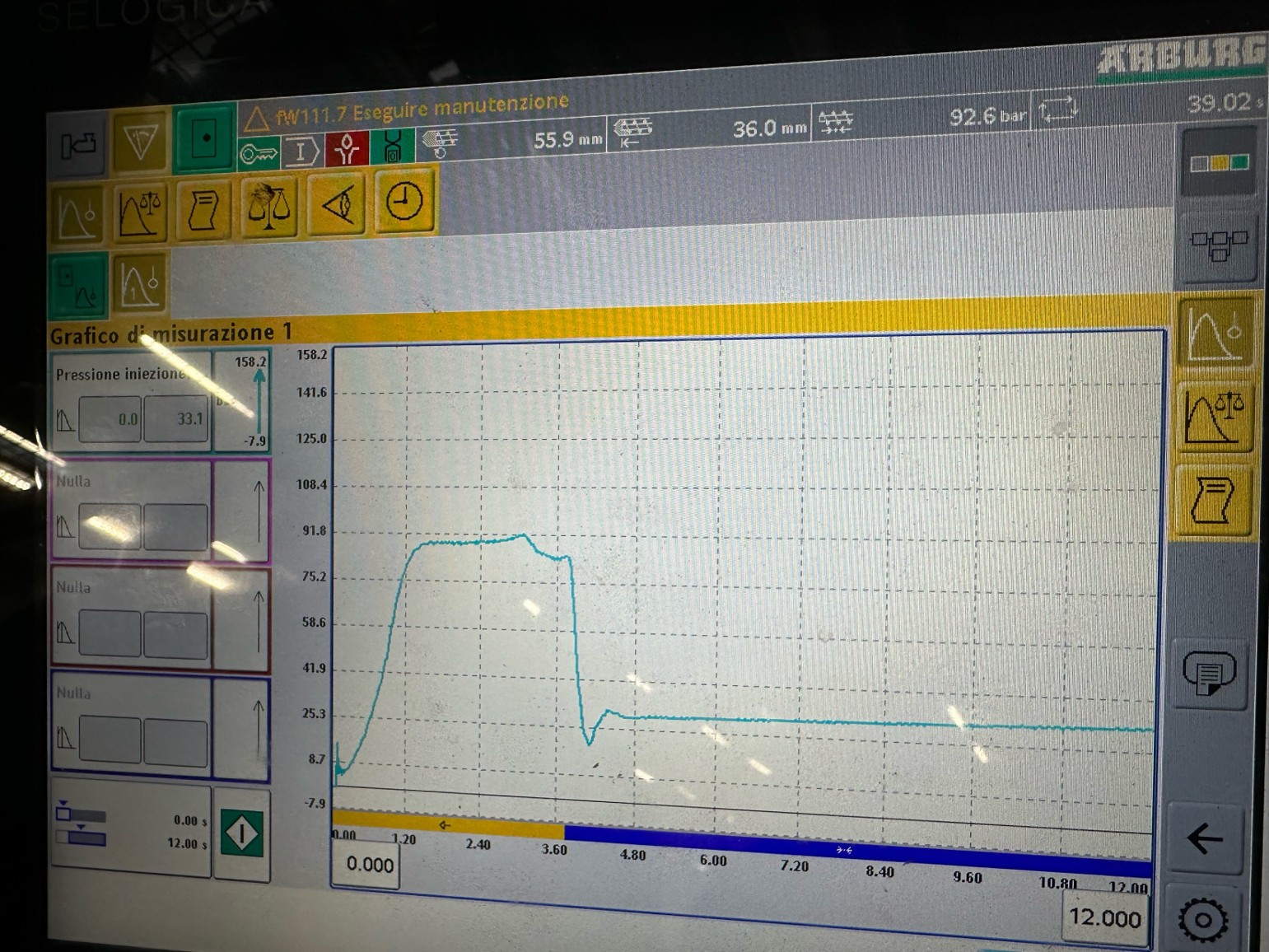
Figure 4 Italian Demonstrator-pression values chart
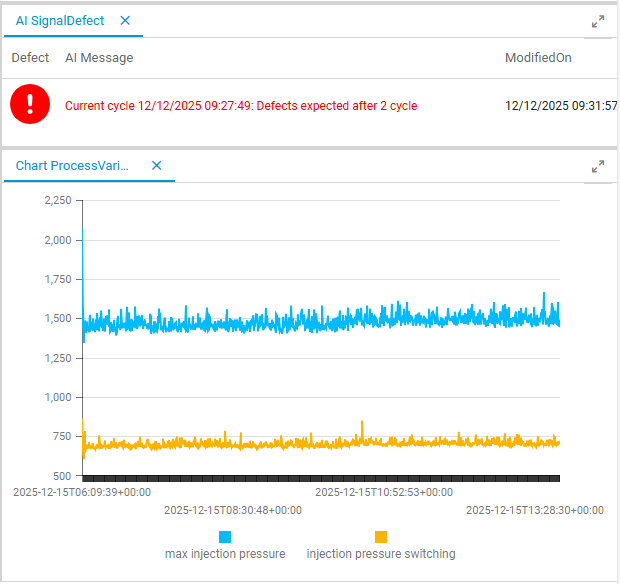
Figure 5 Italian Demonstrator-AI Alert
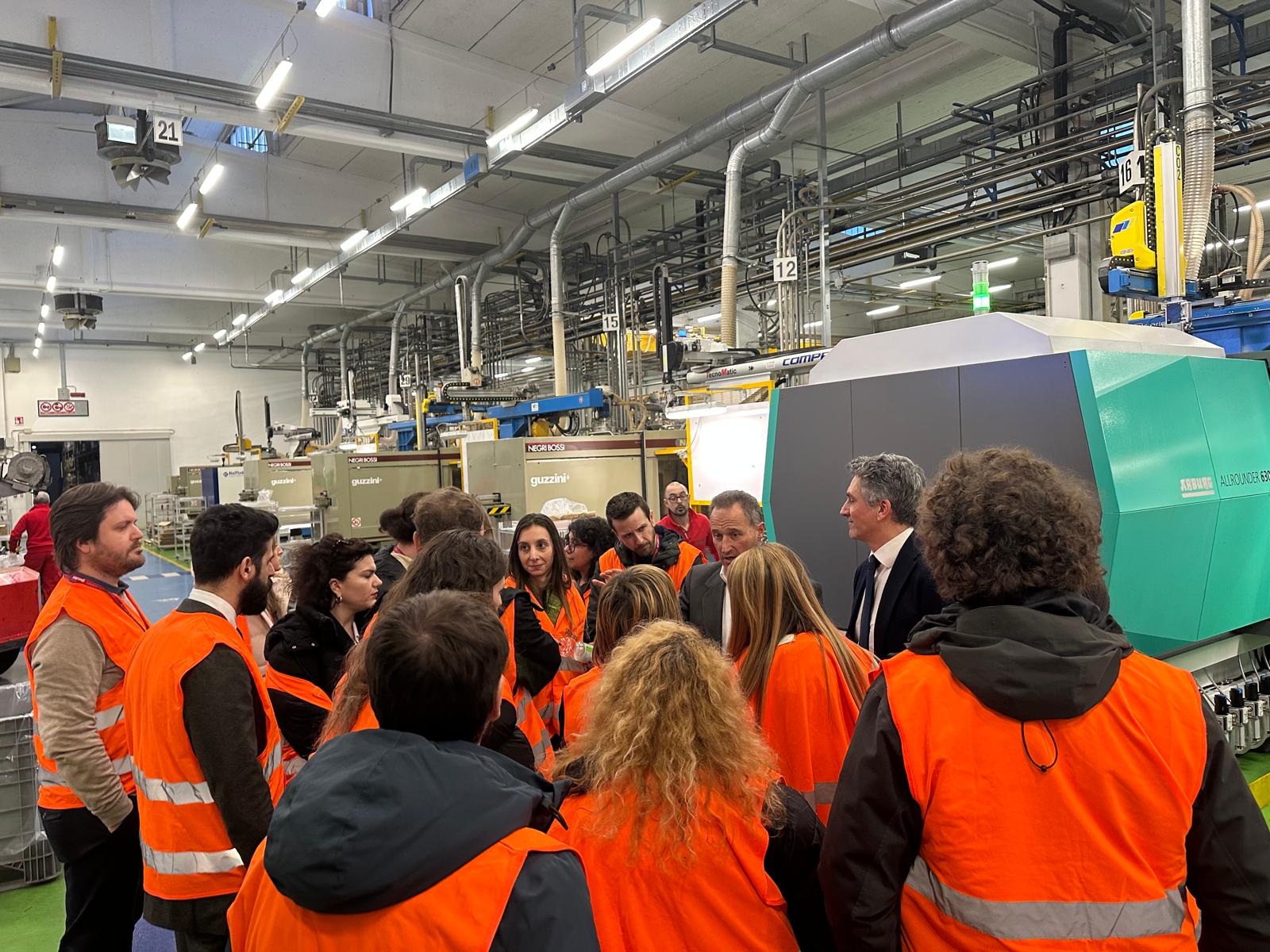
Figure 6 Project partners during the Italian Demonstrator activities at Fratelli Guzzini’s production facility.
What was shown and tested
During the demonstration, visitors could see the full journey in action: recycled plastic being scanned and sorted, real-time production dashboards, AI alerts warning of possible defects, and a digital product passport (DPP) that records the story of each product for full transparency and traceability. The digital planning and monitoring tool, the sorting machine, the material-analysis systems and the AI prediction models were all showcased and tested together as one connected chain.
The results and why they matter
The outcomes were encouraging on both fronts.
- On the recycling side, tests showed it was possible to increase the recycled content by around 15%, moving well beyond the starting point of 40%.
- On the waste side, the results were especially concrete. Starting from a baseline of 3.6 tonnes of material waste, the AI system proved able to identify around 80% of a key type of defect, which translates into a potential saving of roughly 2.8 tonnes of material per year.
- Sorting and scanning technologies also delivered valuable findings, confirming which methods work best for separating and understanding recycled plastic.
Just as importantly, the pilot showed resilience: when a major partner left the project, the team adapted quickly and kept the original goals on track, a real-world demonstration of flexibility.
Looking ahead
The Italian Demonstrator proved that recycled materials and smart, connected technology can work hand in hand to reduce waste, save resources and lower environmental impact. The next steps will focus on refining the material analysis and improving the AI predictions even further, moving towards measurable reductions in emissions. It’s a small but powerful example of how everyday products, even a simple coloured bucket, can help build a more circular and sustainable future.