

Turning industrial wood by-products into new opportunities
Every year, the furniture and woodworking industries generate significant quantities of wood scraps and shavings. While these materials still retain considerable value, they are often downcycled through low-cost chipping or directed towards energy recovery.
The Spanish Demonstrator of the European project DigInTraCE explores a different approach: How can industrial wood by-products be transformed into high-value products while keeping materials in the production cycle for longer?
Located in the Basque Country, Spain, the demonstrator has developed and validated a comprehensive approach for the characterization, classification, sorting and upcycling of wood subproducts generated during the manufacture of wooden trestles and home furniture. The work combines mechanical processing, material characterization, robotics, computer vision and generative design to demonstrate several alternative routes for revalorizing these secondary raw materials.
The result is a portfolio of four different product routes: particle boards, MDF panels, thermal insulation boards and mosaic-type panels.
From furniture scraps to engineered wood boards
The Spanish Demonstrator brings together the expertise and facilities of, ASTIGARRAGA KIT LINE, TECNALIA and ICCS to explore different ways of giving a second life to industrial wood residues.
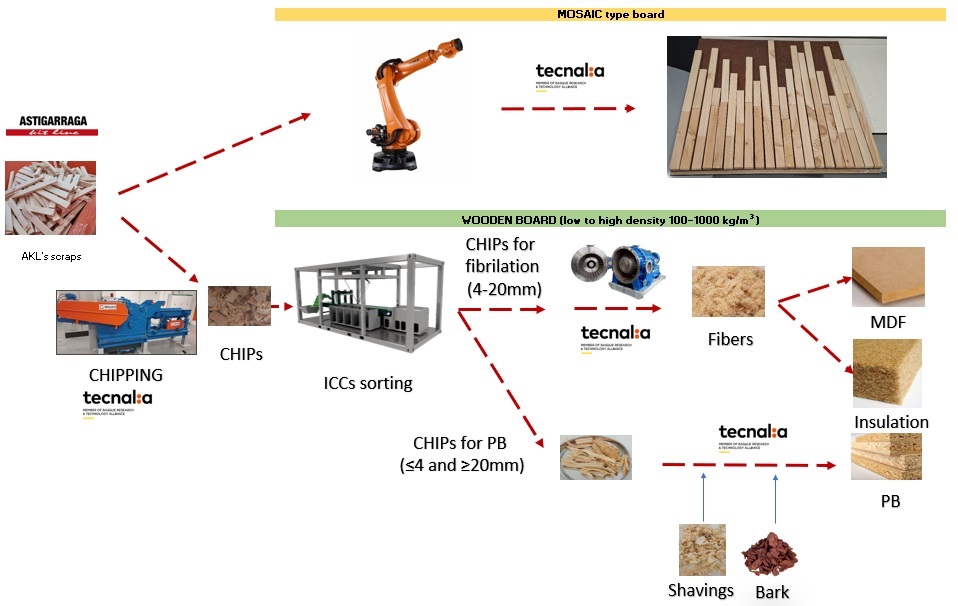
Figure 1. Complete Wood Sorter for Spanish Demo
The process begins with the collection and initial sorting of wood by-products generated at ASTIGARRAGA KIT LINE. The selected materials are then characterized and processed through different routes, depending on their properties and the intended final product.
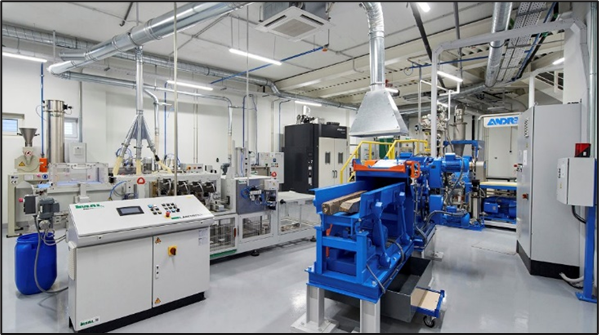
Figure 2. TECNALIA’s pilot plant to produce wooden based panels
For particle boards, the scraps are milled into small particles (fines) for the outer layers, while flakes or chips are used for the core (also shavings). The resulting boards demonstrated promising internal bonding performance, exceeding the properties of the reference materials used for comparison.
The demonstrator also investigated approaches for reducing formaldehyde emissions, including the incorporation of bark powder into the board formulation.
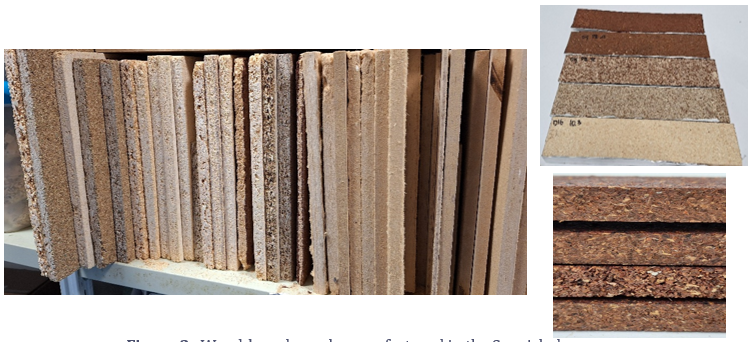
Figure 3. Wood-based panels manufactured in the Spanish demo
These results show that materials traditionally considered low-value residues can become suitable feedstocks for engineered wood products with improved technical and environmental characteristics.
Exploring the potential of recycling scraps to obtain wood fibers
A second route focuses on the production of fiber-based materials.
Chipped wood scraps are processed through high-consistency refining to obtain fibers with controlled length and width distributions. These fibers produced from scraps are then used to explore the production of Medium Density Fiberboard (MDF) and thermal insulation panels.
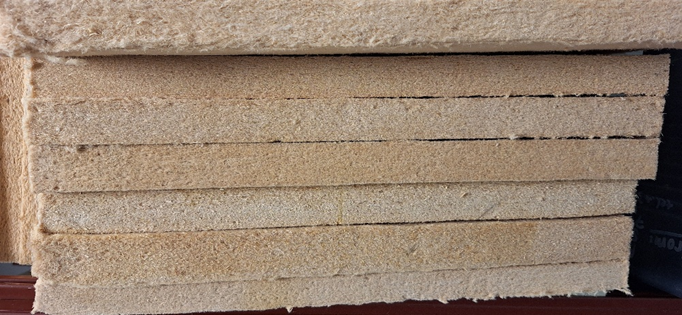
Figure 4. Produced wood fiber boards
An important finding from the work was that the use of universal discs provides a suitable method for producing fibers from wood scraps for MDF manufacturing.
The demonstrator therefore moves beyond simply recycling wood material: Ιt investigates how processing parameters and material characteristics can be controlled to produce engineered products with a high recycled content, with the long-term objective of developing boards composed of up to 100% fibers from wood scraps.
Robotics and artificial intelligence for high-value mosaic panels
The most advanced technological route of the Spanish Demonstrator takes a fundamentally different approach.
Instead of chipping or refining the wood, the project explores the possibility of using whole wood scraps directly to manufacture high-value aesthetic panels.
This is where robotics, computer vision and generative design come together.
A high-end robotic pick-and-place cell developed by TECNALIA uses a vision-based recognition, sorting and cataloguing system to identify suitable wood scraps. A generative design algorithm then determines how the individual pieces can be arranged to create a mosaic-type panel.
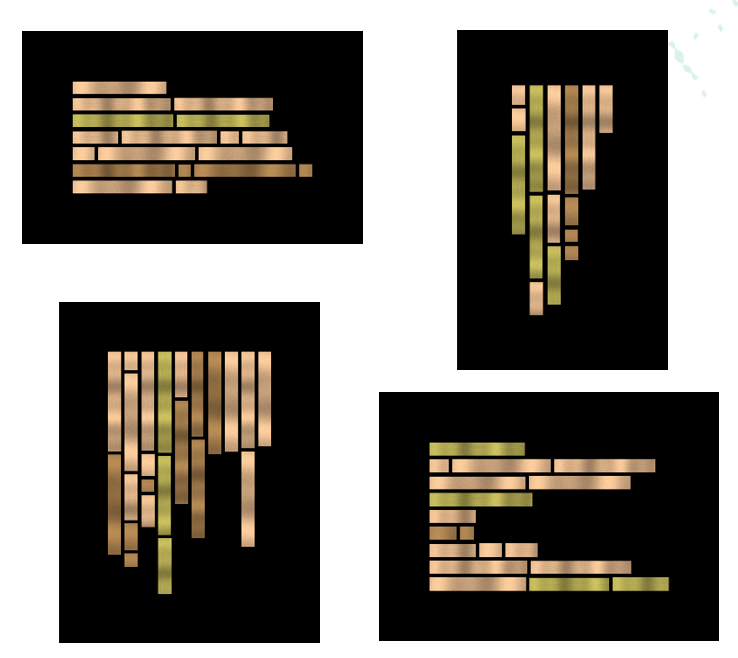
Figure 5. Generated layout variants for the mosaic boards
Once the design is established, a robotic arm selects and precisely positions the appropriate scraps, transforming irregular secondary raw materials into a structured and visually attractive product.
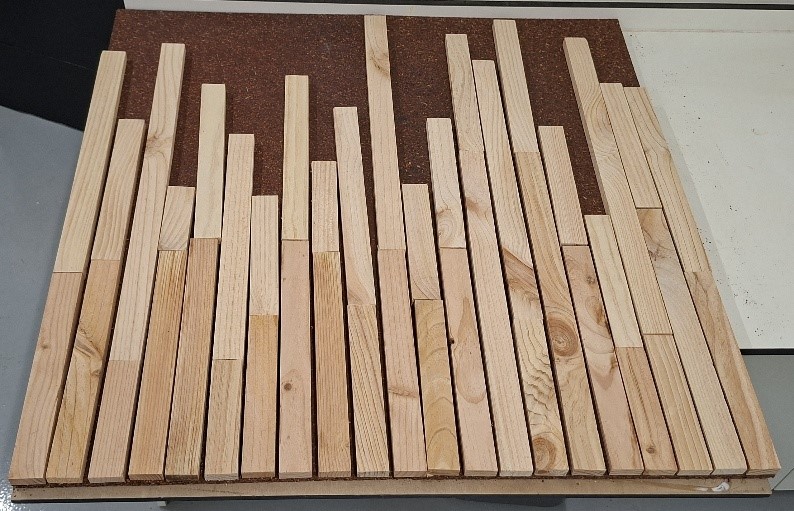
Figure 6. Example of a mosaic design with wooden scraps
This approach demonstrates how digital technologies can create new value from materials that would otherwise have limited economic value. Rather than adapting the material to a standardized manufacturing process, the process adapts the design to the characteristics of the available scraps.
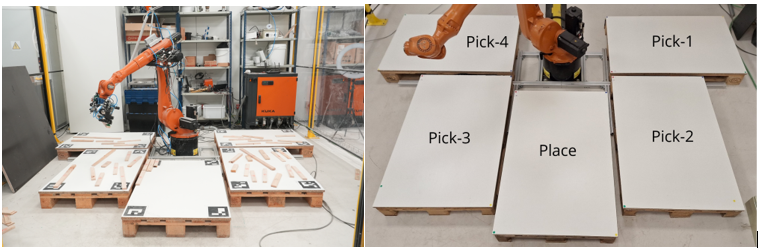
Figure 7. Assembly for the manufacture of the mosaic-type boards
A collaborative demonstration across the value chain
The development of the Spanish Demonstrator relied on close cooperation between the three participating DigInTraCE partners.
ASTIGARRAGA KIT LINE, as Demo Owner and industrial partner, supplied the wood by-products generated through the manufacture of wooden trestles and home furniture. The company also managed their initial collection, sorting and dispatch and contributed to the development of the mosaic-board route, including design definition, gluing, positioning and final panel production.
TECNALIA, as Demo Leader, was responsible for the mechanical processing of the scraps, the production of particles and fibres, and the manufacture of particle boards, MDF and insulation panels. TECNALIA also developed the robotic pick-and-place cell, including the vision-based sorting and cataloguing algorithm and the generative design system, and provided the pilot facilities where the panel manufacturing processes were carried out.
ICCS contributed to the characterisation and sorting of the chipped material, using its dedicated demonstration equipment to analyse samples originating from the Spanish Demonstrator.
The activities took place primarily in Azpeitia, in the Basque Country, at the facilities of ASTIGARRAGA KIT LINE and TECNALIA, while TECNALIA’s facilities in Derio hosted the advanced robotic activities.
From technical development to validated results
The Spanish Demonstrator successfully validated four distinct upcycling routes for industrial wood by-products:
- Particle boards, using milled particles and flakes, shavings or chips and achieving improved internal bonding performance compared with reference properties. Development and validation of bark based particle boards to reduce formaldehyde emissions.
- MDF panels, demonstrating the suitability of wood fibres produced from chipped scraps.
- Thermal insulation panels, exploring the use of recycled wood fibres as a feedstock for insulation applications.
- Mosaic-type panels, demonstrating the direct reuse of whole wood scraps through robotic sorting, positioning and generative design.
The robotic route also generated valuable feedback for further system development. Testing led to important hardware improvements to the robotic end-effector, including the addition of a pneumatic dampener to accommodate differences in wood thickness and solenoid valves to enable the system to handle scraps of different lengths.
These improvements illustrate an important aspect of the demonstrator: technological validation was not limited to producing final products. It also provided practical feedback for optimising the technologies and making them more adaptable to real industrial conditions.
Demonstrating a more circular future for wood
One of the most significant outcomes of the Spanish Demonstrator is its contribution to changing the way industrial wood subproducts are perceived.
Instead of treating scraps and shavings primarily as waste streams for low-cost recovery, the DigInTraCE approach demonstrates that they can become valuable secondary raw materials for new products.
The Spanish experience shows that circularity and digitalisation can work together: material characterisation helps determine the most appropriate processing route; automated sorting makes heterogeneous residues easier to manage; robotics enables precise handling of irregular pieces; and generative design opens new possibilities for turning recovered materials into high-value products.
Ultimately, the Spanish Demonstrator demonstrates that the transition from waste to resource is not only a matter of recycling materials. It is about designing new value chains around them.
By combining industrial know-how with advanced digital and manufacturing technologies, DigInTraCE is helping demonstrate how wood by-products can move beyond energy recovery and become the basis for the next generation of sustainable, high-value wood products.